
Stage 01 / 12
Technological systems
Open systems, ready to run
Open-source systems that cover the needs of a working business run on the enterprise's own servers, with no license fees.
Powered by
The CHERT economy movement
CHERT connects education, open-source business systems, enterprises and income in one economy. Students learn on the same systems that enterprises adopt without license fees, and the graduates who master them carry out the implementation, so technology spending stays as income for local talent.
The CHERT economy cycle
Twelve stages, from open systems to economic and technological capability. Select a stage to see what happens, and which CHERT systems make it work.
Stage 01 / 12
Open systems, ready to run
Open-source systems that cover the needs of a working business run on the enterprise's own servers, with no license fees.
Powered by
Stage 02 / 12
The system becomes the laboratory
Students meet the same systems inside their courses, as laboratory and simulator, starting from the concept the professor already teaches.
Powered by
Stage 03 / 12
Learning by doing, at no risk
Each student builds in an isolated environment where a mistake costs nothing, and learns to configure, integrate and repair.
Powered by
Stage 04 / 12
Real problems, documented methods
Problems that no ready-made product solves enter the university as research, with code and data kept together.
Powered by
Stage 05 / 12
Capability that can be verified
Graduates carry their academic degree together with practical certificates an employer can verify.
Powered by
Stage 06 / 12
Graduates become implementers
The graduates who mastered the systems implement them, under mentor review and service-level commitments.
Powered by
Stage 07 / 12
Enterprises pay only for implementation
Public and private enterprises adopt the systems without license fees, so their technology spending becomes income for local talent.
Powered by
Stage 08 / 12
Sovereignty at enterprise level
The enterprise owns its systems, its data and its continuity, on its own servers, with its own backups.
Powered by
Stage 09 / 12
Every transaction teaches
Running real operations produces reports, market data and documented implementations that lower the risk for the next enterprise.
Powered by
Stage 10 / 12
Use generates requirements
Operation reveals needs the systems did not meet; they return as Think Tank requests and inventions.
Powered by
Stage 11 / 12
Delivered work becomes curriculum
What was delivered becomes a scenario for the next cohort, and research carries suitable results into production.
Powered by
Stage 12 / 12
Capability that stays
Each turn leaves more capability in people and institutions: new ventures, new services and a broader base of experts.
Powered by
Capability, not commodity
CHERT is an economy. It begins in the college, where bachelor’s and diploma students study on CHERT systems as a laboratory and simulator. Enterprises then adopt the same systems without license fees and pay only for implementation, carried out by the graduates who mastered them.
An enterprise pays and obtains a product, a license or a service. The transaction ends with delivery.
Often only a renewable right of access. The code, the roadmap and sometimes the data stay with the supplier.
What a team can do with the technology without returning to the seller. It cannot be bought ready-made.
Technology spending stays as income for local talent, and technological sovereignty rests on a broad base of graduate experts.
The China experience · comparative study
The time, cost, duration and results of China’s experience, from the book CHERT and the Chinese Experience. Each figure is reported with its scope. Funding layers overlap and are never added together.
Billion CNY. In every documented layer, most of the money came from outside the central budget.
No official statement confirms that the 2025 targets were met. China publishes the gap; it does not hide it.
*Preliminary. Enterprises execute 77.7% of China’s R&D (2024).
China is a macro institutional architecture; CHERT is a micro/meso operating architecture. The Chinese evidence supports the principles of the movement. It does not guarantee its results. Read the comparative study →
Interactive architecture
Select any system to see what it does and what it connects to, or play a journey and watch the economy move through the suite.
The foundation every system runs on.
Owned and run inside the enterprise, with its own data.
Services that connect subscribers to each other and to the market.
Where real problems become projects, research and products.
Learning and certification on the systems themselves.
The verified members of the movement.
Devices that run and protect CHERT on site.
Details appear in the panel above the diagram.
Status follows the movement’s evidence rule: ChertIoT is verified in production (v2.0.1). The other systems range from pilot to ready-for-launch to proposed.

Records live on servers the enterprise owns, with backups in its own hands.
Open-source systems with no license lock-in: the code, the roadmap and the right to change them.
Graduates who operate, modify, integrate and teach the systems, so know-how never leaves with a supplier.
Technology spending becomes income for local talent and local enterprises, not license fees sent abroad.
Don’t rent the cloud. Own the mountain.
Discover ChertOS ↗Programs
Four programs turn the systems into learning, work and research.
Real client requests become student work in an isolated workspace. Nothing merges before a mentor reviews it, and delivered work becomes an exercise for the next cohort.
cherttt.com ↗Academic concept → process in a grocery store → feature in a CHERT system. A bridge to the course a professor already teaches.
cherterp.com ↗Courses on the systems themselves, practical assessment, and a verification code any employer can check.
chertlearninghub.com ↗From a real problem to methodology, data, publication and technology transfer, with code and data delivered together.
chertresearch.com ↗The library
The movement is written before it is marketed. Each book is available in English and Arabic.
The foundation
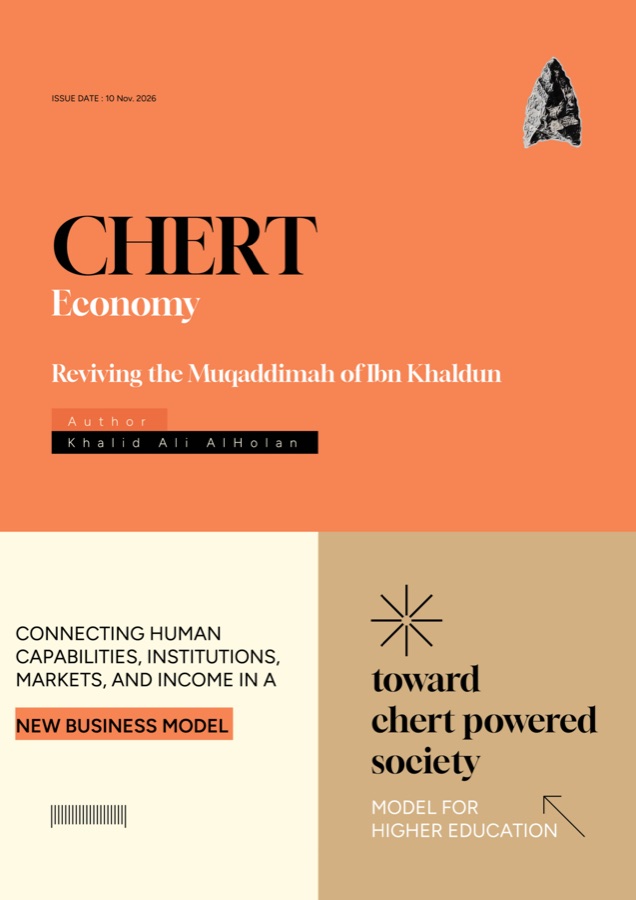
Reviving the Muqaddimah of Ibn Khaldun
Connecting human capabilities, institutions, markets and income: how capability becomes economic participation, and how education, license-free systems, professional practice and the circulation of income can be connected and measured.
Request early access →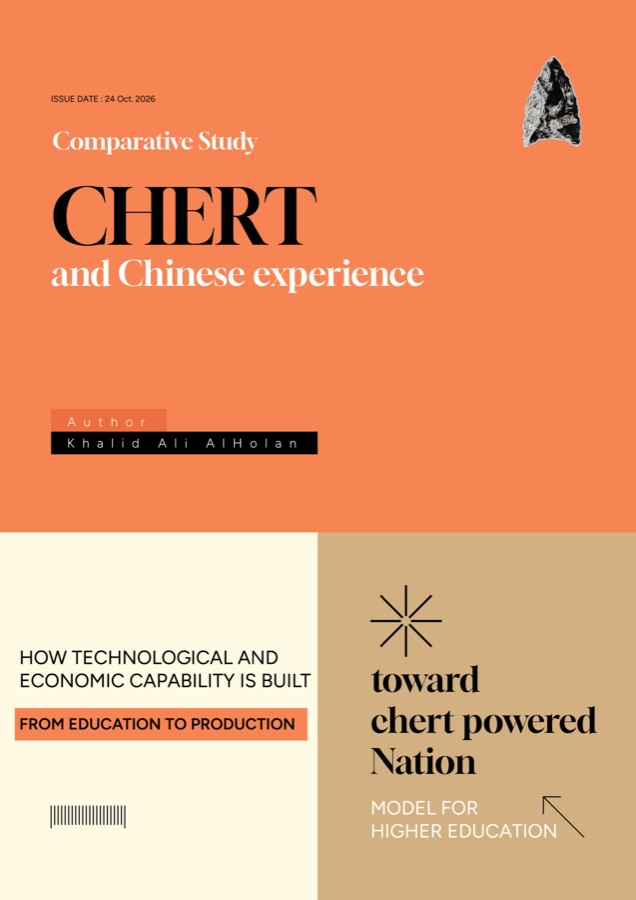
The comparative study
How technological and economic capability is built, from education to production
Tests CHERT against three decades of Chinese policy, from Project 211 to the 2035 horizon: what bore fruit, what remains unresolved, and what a movement outside the state cannot replace.
Request early access →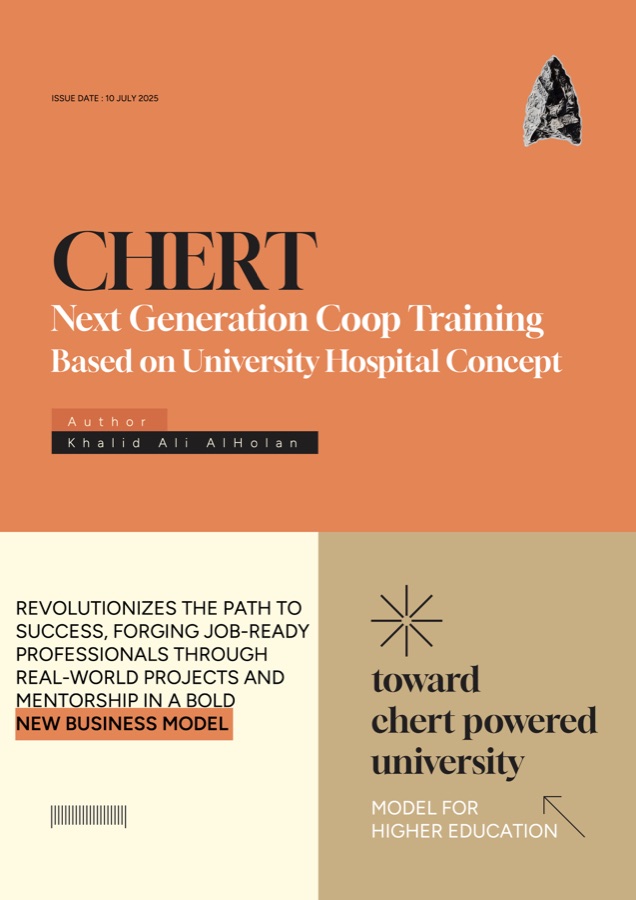
The training model
Next-generation co-op training based on the university hospital concept
Revolutionizes the path to success, forging job-ready professionals through real-world projects under mentor supervision, in a bold and innovative business model. As a university hospital treats real patients while it teaches, the university serves real clients while it trains.
Request early access →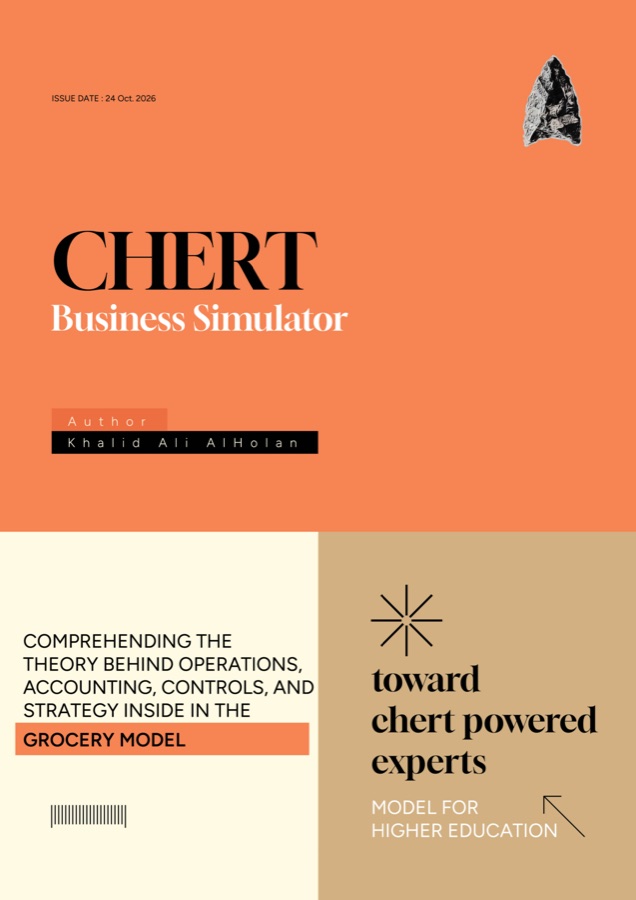
The practice
Entrepreneurial Grocery: a practical curriculum for college entrepreneurship
Understand the theory behind operations, accounting, controls and strategy inside the grocery model: run Al-Rawdah Mini Market in Riyadh one transaction at a time, inside a real ERP. Open under CC BY 4.0.
Request early access →
The entrepreneurship method
Participatory entrepreneurship methodology
Collaborative entrepreneurship without investors. Participants build the venture with their work, knowledge and resources; a contributions ledger documents every contribution, and a quota-based approach turns that record into a fair share of ownership.
Request early access →Your place
Graduate able to install, configure, integrate and maintain real systems, then grow into an employee, practitioner, researcher or founder.
Add practice to the courses you already teach: laboratories, simulators and a research lifecycle, without changing the study plan.
Own your systems, your data and your continuity. No license fees; pay for implementation by certified local talent.
Inquiry connected to real conditions of use, on an open-source foundation you can examine, extend and carry into production.
An operating layer that complements national programs and makes the links between education, talent and industry measurable.
A two-sided market in formation: universities produce experts, and license-free systems create demand for them.
Evidence
Vision is not evidence. Every statement about CHERT is labeled, and a future result is never presented as if it were already achieved.
Systems existing in their documented state.
The model, cycle, roles and rules in project documents.
What will be done to turn design into a real economy.
What is awaited, and will be measured after launch.
Founding partners
CHERT is entering its launch phase. We invite universities, enterprises, public institutions, researchers and investors to join as founding partners: to pilot the systems, shape the curriculum around real demand, and measure the results together. Tell us how you would like to take part, and our team will contact you to agree the right starting point.
Already a member? Sign in to ChertClub